Meeting with Chara Kafantari – Member of the Democratic Party, Former Parliament Member
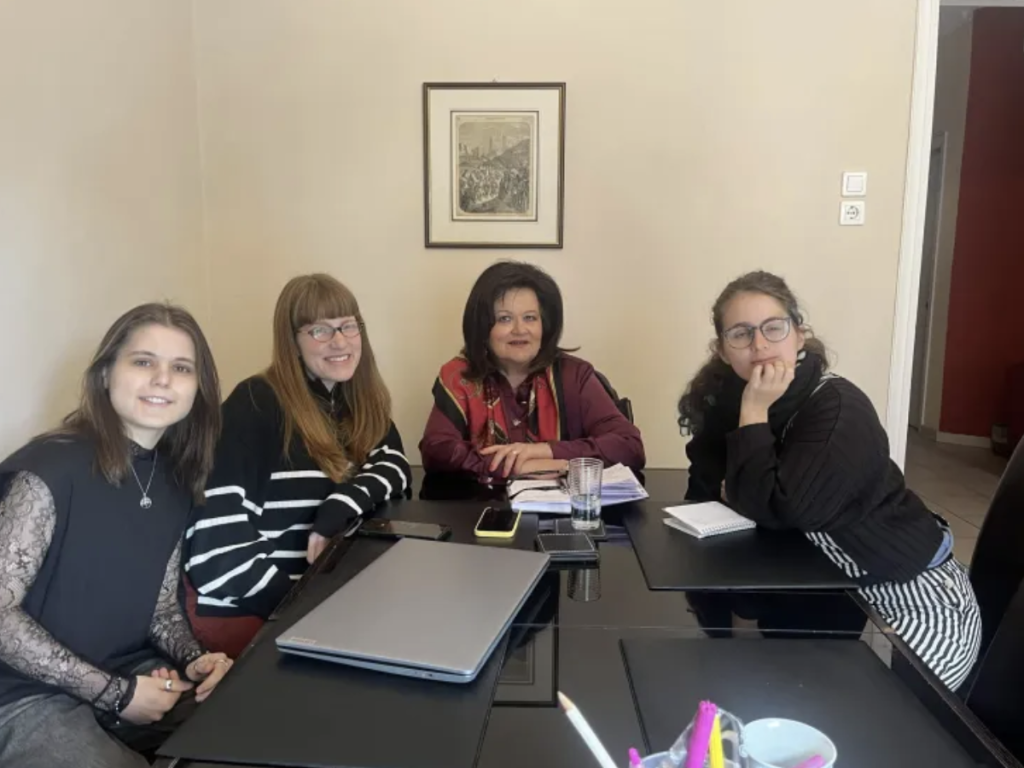
On Thursday, 02 April 2026, our participants of the ECHOES project met with Chara Kafantari, member of the Democratic Party and former Member of Parliament, to discuss the current environmental and urban challenges facing Athens. During the discussion, Ms. Kafantari shared crucial insights into the most pressing issues affecting the city today, as well as the gaps in policy implementation.
According to Ms. Kafantari, one of the most critical problems in Athens is atmospheric pollution, which remains a major issue across the Attica basin. She explained that an important step toward addressing this challenge would be the expansion and densification of air quality monitoring stations, allowing for more accurate data collection and more effective policy responses.
Another key issue discussed was water management and the growing risk of water scarcity. Ms. Kafantari emphasized the need for modernization of the water infrastructure, as well as the implementation of more efficient irrigation and water management policies. In this context, she also referred to the concept of circular economy in water use, highlighting the importance of water reuse. She noted that political initiatives have already proposed specific targets for water recycling to be achieved by 2030 – 2035.
We also spoke about the lack of green spaces in Athens. According to Ms. Kafantari, parks, groves, and green urban areas are significantly limited, and there are currently no concrete plans or projects aimed at expanding them. Instead, urban development continues to prioritize construction, further reducing available green areas and negatively impacting the quality of life in the city.
The discussion also addressed the protection of natural landscapes, particularly mountainous areas surrounding Athens, which are increasingly threatened by wildfires. Ms. Kafantari stressed the importance of both preventive measures and reforestation efforts in order to preserve these ecosystems.
Energy-related challenges were another important topic. She highlighted the need for energy upgrading of buildings, as well as the promotion of energy communities. As an example, she referred to the “Athenian Energy Alliance,” an initiative involving the Municipality of Athens in collaboration with other municipalities, aiming to promote sustainable energy practices at the local level.
Sustainable and rational waste management was also identified as a key priority. Ms. Kafantari emphasized the need for more efficient and environmentally responsible systems for handling waste.
In terms of mobility, she pointed out the importance of strengthening municipal public transportation, as well as promoting electric mobility. This includes both increasing the use of electric vehicles and expanding the network of charging stations across the city.
More broadly, Ms. Kafantari underlined that many of these issues persist not due to a lack of ideas or proposals, but because of political resistance and limited commitment. She noted that there is often no binding framework or clear obligation to implement policies, which results in delays and inefficiencies.
At the end of the meeting, our participants reflected on the discussion and agreed that the challenges highlighted by Ms. Kafantari demonstrate the urgent need for more effective policy implementation, as well as stronger political accountability. They also emphasized the importance of citizen awareness and engagement in pushing for meaningful change and a more sustainable future for Athens.