CONTACT US
Two Local Workshops on Climate Advocacy and Leadership in Brussels
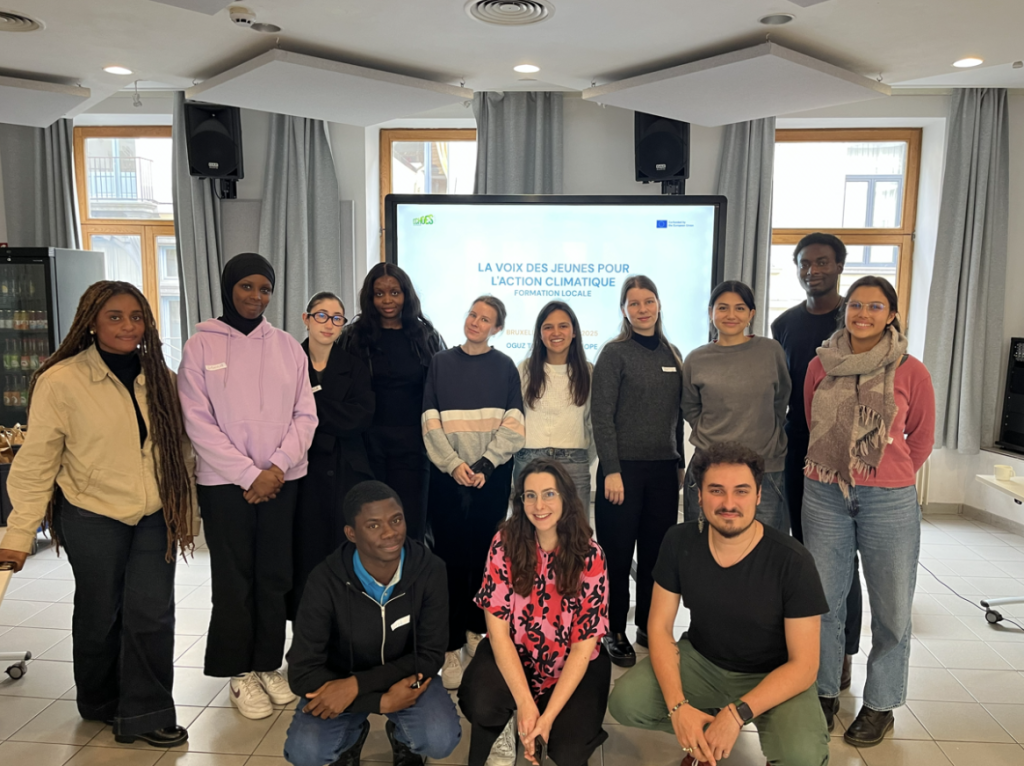
As part of the ECHOES – Youth Voices for Climate Action in European Elections project, CERA Europe organised two local training workshops in Brussels in October 2025, bringing together young people to build concrete skills for climate advocacy and leadership.
4 October – Climate Advocacy Skills
The first workshop, Formation de compétences en matière de plaidoyer pour le climat, was held on 4 October 2025 and facilitated by Arno Van Overberghe, a lawyer specialised in international and European human rights. The session aimed to equip participants aged 18 to 30 with the fundamental concepts of advocacy, practical strategies for engaging with policymakers, and communication skills to influence decision-makers on climate issues.
The training combined a theoretical introduction to the concept of advocacy with hands-on group exercises, including a decision-maker mapping activity (cartographie des décideurs) and a role-playing simulation where participants practised presenting to a political decision-maker. The session was grounded in CERA Europe’s Climate Awareness and Advocacy Toolkit (CADPRO), and organised under the supervision of CERA Europe’s Oğuz Tutal.
Participants showed strong engagement throughout, particularly during the practical exercises. The facilitator noted the group’s high level of motivation and curiosity as a defining strength of the session.
18 October – Leadership and Campaign Design
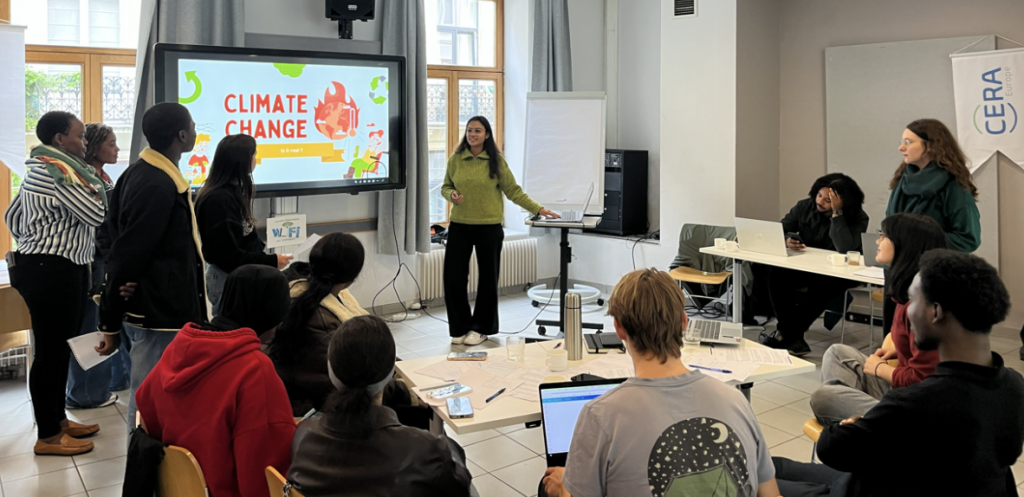
The second workshop, focused on leadership and campaign development, took place on 18 October 2025. Facilitated by Alain and Oğuz, the day opened with an icebreaker and a presentation of current climate challenges before moving into two structured activities.
The morning session, Decision Room – Leading Under Climate Pressure, was a simulation game designed to place participants in real-world leadership scenarios under time pressure. Participants navigated complex decision-making situations, exploring questions of ethics, risk, and responsibility in the context of climate action.
In the afternoon, participants worked in small groups on a creative campaign design exercise with a twist: unlimited funding. Each group identified a sustainability challenge and designed a fictional organisation to address it. The results were striking in their ambition. One group conceived REFOOD, a local collective tackling food waste by centralising unsold produce from farmers and shops and redistributing it — by bicycle — to disadvantaged areas, alongside awareness campaigns in schools and businesses. The second group proposed Mode Sans Fossile (MSF), a campaign to end the use of fossil fuels in fast-fashion transport, calling for bolder regulation, relocalisation of production, and a shift in consumer culture.
The day closed with participants reflecting on their expectations: most felt they had gained new skills, found inspiration to engage more actively, and walked away with fresh ideas for climate action.